Posts

Showing posts with the label OT stories

On compassion and reward

Image
  I know that sometimes I start stories and they don't always get finished.  Sometimes that happens because there is no ending - or at least there is not an ending to be found with the framing I was using. That was always the nature of my private practice - and my hesitancy in discharging children and their families. Who is to say that any person's needs are completely addressed? Or that as a therapist I was able to generate a perfect and complete answer that would persist over time? Sometimes the stories I think about finished themselves and were easy to write even if it hurt.  Sometimes the stories needed some kind of ending punctuation -  a final act from the therapist. I keep thinking about one story that did not seem to have an ending, so I thought I would visit with it again. I might have found an ending. +++ I wrote, "I guess now we will see what happens next." Xinren never came back. I never heard from the family again.  I don't actually know what happ...
The stories we tell ourselves about the past

Image
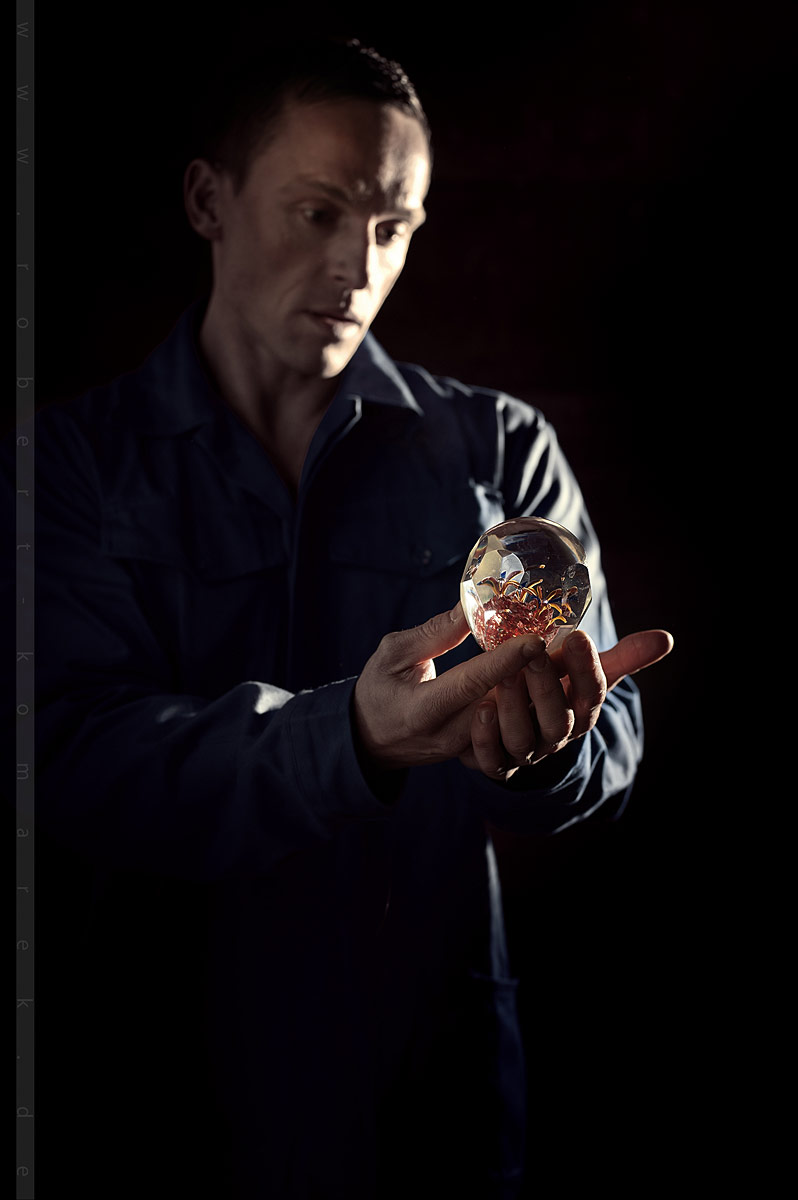
The concept of narrative captured my interest sometime around 1984 - ironically - because it may have been the Orwell novel with that year's title that prompted my thinking on the topic. I was interested in written narrative and how Winston Smith established his rebellion and then his freedom through a written form (even if it all eventually led to a horrible end). I was also fascinated by his attraction to the paperweight that he purchased - something that was old - and seemingly of unknowable utility. What was the purpose of knowledge, or of the past - except that it all did represent a freedom from the drudgery of the present.  So the paperweight meant something to him, just like his writing meant something. Winston told himself a story about the past.  He created a narrative. As I am on a precipice of decision regarding our private practice I find myself spinning narratives, perhaps to tell myself a story about the past.  I started telling the stories to my wife - may...

Trust, but...

Image
I have been seeing Xinren for several months, on and off, in a primary care fashion.  That is a frustrating interaction pattern from an occupational therapy perspective, and perhaps one that as a profession we are simply not acculturated to.  In traditional contexts occupational therapists see children on an ongoing and regular basis.  Xinren's family would call and then would be seen for a consult and recommendations were made and then they seemed to not follow up for some time. The family initiated contact with me because they were concerned about their child's gross motor skills. The initial evaluation indicated that three year old Xinren had a lack of muscle tone and strength in both lower extremities, primarily in the ankles and feet.  Deep tendon reflexes were diminished and he had tightness in his heel cords and only trace strength in his ankles and toes that had a clear impact on his play skills.  I sent my report to the doctor who had no problem wit...

There is no app to solve this problem.

Her eyes still blurry from the night's rest, Emily reached for the beeping phone that alarmed her into wakefulness at precisely 6:00am each day.  Barely able to focus, but still noticing the tightness of her FitBit around her wrist, she swiped around her phone until she could find her SleepTracking app.  Noticing that she was restless and had 20% less REM sleep than the night before, she quickly determined that she was exhausted. She glanced at the time.  6:01am. "Alexa, what is my first appointment today?" she asked into the air.  She loved the syncing between her work calendar into her home.  "You have a meeting at 8am and a reminder to call Ella's teacher before 9am."   Emily heard a sudden alert from her phone, indicating that her phone call with the teacher has been labeled as a stress event, based on previously collected data on heart rate changes based on time and event.  Her wellness app automatically scheduled 15 minutes of meditat...

Re-post: The Passion from a kid's perspective

Image
A story worth re-posting: A fairly standard component of my pediatric occupational therapy evaluations is to ask the child to draw a picture of themselves. This assessment technique provides an opportunity to evaluate the child's skill with writing and also is a functional assessment of their cognitive and perceptual ability. Sometimes kids draw things that just beg to be probed and questioned - as was the case recently. I watched intently as 6 year old Patrick drew a representation of himself, but then he began adding odd details to his picture. First he colored dark spots on his figure's hands and feet, and then added a row of X's across the forehead. I leaned forward and quizzically asked, "Patrick, what are these marks here?" He looked at me for a moment and then responded: "Jesus died for you, you know. He got nailed to a cross, in his hands and his feet. My Dad said that he had to wear prickers on his head and it made him bleed....

The danger of assuming universal and singular narrative explanations of disability

In a recent article appearing on the CNN website, author Wayne Drash reviews the concept of 'wrongful birth' in context of Lesli, a person who has developmental disabilities.  Drash's profile states that he "specializes in stories off the radar" and that "his passion is to tell narratives about life and the unfolding drama of the world we live in." It would be more accurate to state that Drash cherry picked one person's perspective and advanced a fiction that serves one ideological perspective. His initial description of Lesli in his opening sentence tells us everything he believes about her person-hood.  He immediately goes to the 'fetal position' trope that promotes his message of Lesli's helplessness and haplessness. For just a moment the reader is led to believe that there may be another side of the story to be told as he describes Lesli's joy at having her mother hold her hand - but the author quickly reverts to reporting...

The use of online journaling as a qualitative methods datasource

Ongoing ideas re: this topic.  Previously posted (in part) - now with edits and with references updated. +++       During the Modern period most people achieved a basic level of education, opening up modes of writing including contexts of first person perspectives and autobiographies.   Weintraub (1995) states “the autobiographic genre took on its full dimension and richness when Western Man acquired a thoroughly historical understanding of his existence.”   Once this level of understanding was achieved it was possible for humans to consider their existence within individual contexts.      Breines (1989) identifies that “human action can be understood only in terms of the relationships that it generates with the world.”   From a pragmatic perspective, Breines states that a person’s ability to ‘connect’ with the world is dependent upon active and meaningful engagement with the environment.   Not only is this a...

Collected thoughts on narrative in occupational therapy documentation

About ten years or so ago I wrote about the potential power of using writing and hypertext as a qualitative methodology for understanding human narrative.  I got that idea back in high school, actually, after reading the Langston Hughes poem, Theme for English B: The instructor said,       Go home and write       a page tonight.       And let that page come out of you—       Then, it will be true. I wonder if it’s that simple?... The poem is all about identity, and expression, and trying to understand point of view.  I struggle with this concept of documentation as representation of life.  Can documentation represent life, really?  I think it can when I read Langston Hughes, but when I focus in on a short essays like in the Humans of New York series I can't read more than one or two of them. I object to them, mos...

Sad days

"Today is my sad day," stated Lauren, in a matter of fact tone. I work with many children who have superior language skills.  Often, those language skills outpace motor expression and emotional coping ability.  Sometimes doctors or psychologists call it a non-verbal learning problem or sometimes they will label it Asperger's Syndrome if the child has other behavioral quirks.  Either way, I am accustomed to hearing kids say things to me that would take the average listener off guard. Lauren was a quick-witted and confident child with uneven red bangs from her own attempts at hair-styling.  Besides those bangs she had long tangled curls cascading down her back because she could not stand having her hair brushed.  Lauren had a habit of curling and twisting her hair in her hands, contributing to the tangles.  The mom intended to cut her hair to her shoulders but Lauren bargained herself a delay because she wanted long hair and also because she had the abili...