Posts

Evil exists in the world - knowledge can help you overcome it

June 1st is coming - and it reminded me of a particularly sad CSE meeting that I attended a few years ago. There are rules and regulations governing special education in NYS and to some degree there is room for interpretation of those rules and regulations. Parents and districts sometimes disagree on what those rules and regulations mean, and sometimes districts can 'bend' the regulations to accommodate student needs. In the sad meeting I referenced I sat in amazement as the CSE chairperson approved every single service for a child - and I was surprised because this particular chairperson had a reputation among the parents for being somewhat recalcitrant to parent requests and unfriendly in general. I really didn't expect the meeting to go so smoothly because it was the parent's intent to enroll their child in a private school but they were still asking for special education supports from the school district. There are legal parameters for what a district has to do ...
Maple seeds and putting your face into the wind

Image
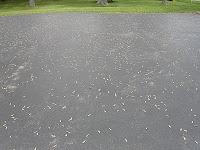
The clock was ticking past the 10am appointment time, adding much to the level of stress that Michael's mom was feeling. Michael had more important plans than therapy and did not want to come inside the building for his appointment. Over the weekend several thousand maple seeds fell from the trees, covering the parking lot and creating a rather large distraction for any child who had to make their way from their car to our front door. I watched Michael as he grabbed handfuls of the seeds, stood on top of a stone in the yard (as if this somehow added significantly to his actual elevation!), and launched the helicopters up so he could see them twirl whimsically to the ground. It was such a simple childhood occupation but it was so much fun, and it caused me to pause this morning because I was a little surprised at how simple the play was and how apparently meaningful it was. Playing with the helicopters evoked happy feelings for Michael - and for me - but not for his poor mo...

Left and right

Image
The other day five year old Melissa came stumbling into my office, feet intertwined as she made the final leap over the threshold and into the waiting room. Her arms flailed about her in a desperate attempt to regain her balance, she fell into a chair and held her cheek against the back of the seat as she breathed heavily and said, 'Wow! I almost fell!” It amused me, mostly because her definition of 'almost falling' is probably the same as anyone else's definition of 'definitely falling.' Her mom followed into the room behind her, rolling her eyes, and undoubtedly wishing that Melissa would be less clumsy or more attentive or perhaps both. Parents have a unique way of perceiving current problems by projecting them into the future and worrying terribly about whether or not their child will be able to meet the demands of the world and of course meet their greater aspirations. This puts parents into points of conflict with teachers or other school personnel who...

April is Occupational Therapy Month

Image
Occupational therapy helps people make lifestyle or environmental changes when they experience injury, illness or disability. By looking at a client’s psychological, physical, emotional, and social make-up, occupational therapy assists people to achieve their goals, function at the highest possible level, maintain or rebuild their independence and participate in the everyday activities of life. Children and Youth Pediatric occupational therapy professionals provide service to infants, toddlers, children, and youth and their families in a variety of settings including schools, clinics, hospitals, and homes. Under the Individuals With Disabilities Education Act (IDEA) regulations, occupational therapy practitioners also participate in broad new initiatives such as early intervening services and response-to-intervention to promote optimum learning. Pediatric occupational therapy practitioners provide support to families and collaborate with other disciplines such as special educators, te...

The role of occupational therapy for children who have behavioral difficulties

Image
Behavioral problems in children are sometimes difficult to solve. Caregivers and even professionals often search for what I call an 'easy button' to solve complex problems. I have always believed that using a general systems methodology prevents the inappropriate reduction of complex system problems to single-point causes. Human beings are meaning-making creatures, however, and that causes us to sometimes reduce complex data into single-points even though it doesn't make sense to do so. As an obtuse example - if you ask the average person what caused the shuttle Challenger to explode they will tell you that it was Morton Thiokol and faulty O-rings. Although that is true, it is more true that there were other factors including cold temperatures, design errors, lack of redundancy, and flawed human communication. Anyway, my point is that humans like to find single-point answers to problems and that sometimes causes people to come looking for occupational therapy evaluati...

Pediatric occupational therapists: Please check your outrage at the door

I received a lot of email regarding this recent article in the NY Times about occupational therapy . The email I received and online conversations I have scanned included comments like "I can't believe they would say that OT is only for rich people!" or "We need to let people know that this article does not represent what we do!" Although the article got a lot of occupational therapists upset I would like to suggest that we need to perform a reality check on this outrage. The article comments about how occupational therapy is being used by some more affluent people to promote children's development and how this can be contrasted to a more traditional application of the profession to children who have more severe disabilities. The article offers some incisive opinion that perhaps this kind of trend is a reflection of a larger problem with schools or even a problem culturally with how childhood is being experienced. Although the online discussions following...

Darkness and light

My Dad doesn't know, but there are two defining childhood occupations that he introduced me to that were relatively critical for defining my own decision making and problem solving style. Oddly, both occupations happen in the dark. The first occupation occurred within the (dis)comfort of the confessional. Sacramental reconciliation was an opportunity for self-reflection and getting back 'into good grace.' There was a ritual to the process that happened in the darkness of a closed and tiny booth - each week you had to 'face' the priest who could not see you and all the while pray to God that he did not recognize your voice! My favorite aspect of this was when you would say, "For these and all the sins of my past life I am sorry." It was such a catch-all point of relief - it was instant absolution no matter what. I wish my own kids didn't have to miss out on that feeling of having a 'clean slate' but this is not the way reconciliation is pr...

Are we focusing on the best things so we can improve our early intervention program?

The value of anecdote is not in capturing a comprehensive analysis of a system's problems - but rather in making an example of a small issue that reflects a broader pattern. I understand that use of anecdote as a tool can also be fundamentally incorrect or even dangerous but I hope that I have documented enough other information about the early intervention program (in places like here and here ) so that this presentation will be honest and fair. I also understand that any 'for the children' rhetoric causes large swaths of people to immediately tune out of a conversation but it is difficult to frame this discussion about early intervention services outside the context of how it actually impacts children and families. The truth is that the future is a little uncertain about early intervention services in New York State. Today's anecdotal evidence comes from this situation: one of my therapists had to write a progress report for a child who is enrolled in the early int...

The dangers of misinterpreting grocery carts when completing occupational therapy evaluations

Image
During a conversation someone recently described a situation where they wanted to get a cart for transporting groceries from a car to inside the house. It was a phone conversation and I was listening intently, trying to understand what this odd device was that they were describing. They kept calling it a grocery cart and all I could think of was the cart that you use in the actual grocery store - that looks like this: The conversation moved to other topics but later that day I got an email with the following picture, along with some gentle ribbing "Don't they have these where you live?" As soon as I saw the photograph I immediately recognized the product and knew exactly what they were talking about - but the point here is that there was an initial block that made it impossible for me to understand what was being described. First of all, if someone where I live had one of those they would have to push or pull it several miles just to get to the nearest grocery store. S...

Things that stop you in your tracks

Image
I was doing an evaluation recently - and I should know better than be shocked at the things that come from the mouths of children... It is important for therapists to be observant: it is a skill that I drill into my staff and my students on a regular basis. There is always a lot to observe with preschoolers beyond the typical issues of how many blocks they are stacking or how they are holding their pencil. As is usual my mind was operating on two different levels during a recent evaluation. While we were stacking blocks I noticed the double whorl pattern in the hair of the five year old I was seeing and I was drifting away into some articles I read about the controversy over whether or not this was a phenotypical expression of altered neurological development and hemispheric lateralization or if it was just an incidental finding. I think that I need to read more because of the recent challenges to this concept that I am now aware of. Anyway, then I looked at the hands of the youngst...

Folk taxonomies and sensory processing disorders

At least once or twice a week I get email or comments on the blog from people asking me if I think they or their children have a sensory processing disorder. The range of concerns most commonly includes one or more of the following: difficulty with attention, difficulty tolerating clothing textures, dislike of certain tastes or smells, or social anxiety. The problem with diagnosis of these symptoms is that the field of learning disabilities or psychology or even psychiatry has a very poor record of diagnostic stability over time. Diagnosis tends to take on the flavor of 'current thinking' - so for example if you had these problems in Freud's time you would likely come away with a very different diagnosis than what you might receive today. That doesn't instill confidence in a person like me who is looking for a more universal and longstanding point of accuracy about these matters. A compelling example of this is the diagnosis of pediatric bipolar disorder, effectivel...

Revisiting predictions from the past.

I regularly try to find justification to feed my children on why they need to listen to me - so today I will co-opt this space for personal use. Over four years ago I made a prediction and a wish - and today it came screaming to life as I watched CNN in the airport on my way back home from Chicago. All day they have been focusing their reports on how technology is being used for fundraising and to help connect and reconnect displaced people in Haiti with their families. That reminded me that I wrote about using the technology for this purpose well over four years ago - long before it was ever really used in that way! After I posted those comments in 2005 I watched social networking for two years and wondered which social networking service would emerge on top, and then I joined Facebook in 2007 - even though it was still primarily a college student phenomenon at the time. I was promptly ridiculed by my son who told me I was 'too old for Facebook!' I remember I showed him t...

Occupational justice, as taught by Mrs. J.

I got an interesting email asking me what my current views of occupational justice were - this blog gets a lot of hits on that term thanks to Google page rankings and the fact that I wrote an article on the topic several years ago. I have been long disappointed that no one ever wanted to dialogue (in public) on what I wrote several years ago but that blog post sure does get a lot of hits and tends to generate 1-2 private email responses a month. For the most part I have tried to lose the concept of occupational justice from my thinking and practice. The primary reason for my purposeful disconnect is that the term has been somewhat politically co-opted in the last two years and now holds a lot of political connotation along with 'social justice.' I also have been re-thinking the difference between occupational need and occupational right. At this time I am a little more interested in occupational needs. Rights need to be considered alongside responsibilities, but the existi...

Luke 2:10

The day before Christmas eve is always busy, and yesterday was no exception. The office will be closed for several days and there were so many things that needed to be done. Payroll had to be audited and sent out, some schools had paperwork deadlines for the end of the second quarter, schedules needed to be coordinated for time off so we were sure to have coverage for those families that wanted services next week, some end of the year banking needed to be done... on and on. It was busy, and the message was delivered this year on cue in the form of Tina. At the very end of the day we had three families jostling past each other between appointments and Tina burst through the front door on a mission. She made a bee-line straight toward me, absolutely disregarding all the social cues that might have otherwise indicated she needed to wait. It didn't matter that other parents were standing near me, that we were engaged in a conversation, or that her own mom was trying to corral he...

Conversation with a future OT student

From: A future OT student Sent: Sunday, December 13, 2009 7:07 PM To: chris@abctherapeutics.com Subject: from a future OT student: wanted to say thanks Dear Dr. Alterio, I just wanted to thank you for all of the great stories you posted on your blog... I am writing to you because I have been searching for stories by occupational therapists where they actually help people, where they make a real difference. After going through prerequisites, applications and finally being accepted into two of my top choice schools- I have found terrible posts on [a website] posted by ex occupational therapists and some physical therapists which all revolve around how occupational therapy is an ineffective, terrible profession to go into. They warn people to stay away from the profession. Many people have written in response to those posts saying that because of them, they have changed their mind. You helped me to not change my mind. I started looking into occupational therapy after having worked with s...

Questions about AOTA's response to the National Autism Center

The National Autism Center published a comprehensive National Standards report regarding evidence-based practice guidelines for children and young adults who have autism. The report is an excellent summary of research about intervention methods and effectiveness. It was particularly interesting to me that this report referenced and hoped to expand on the New York State Early Intervention Clinical Practice Guidelines for autism spectrum disorders which of course is a document that is familiar to many of the families in my geographic area. The NYS guidelines were published ten years ago so an update to include new research was needed. The new report focuses on quantitative studies and in this sense some important occupational therapy literature may not have met the inclusion criteria. There have been some excellent qualitative studies completed that make important occupational therapy contributions to best-practice considerations so I am really looking forward to the next report th...

Sustainable communities and disaster relief for people who have disabilities

In general, people are not inspired to continue monitoring post-disaster relief operations after most of the television cameras leave. So any commentary on this topic may seem to be johnny-come-lately except for those who sustain their interest and understand how big the problem really is. This is an attempt to refocus a little bit of attention on an issue - and I am not as interested in getting preachy as I am in shining a flashlight on issues that are good fuel for action. There is a great competition for students to examine the challenges that people who are elderly or disabled face during and after disasters in their own cultural and local contexts. I hope some students see this and become interested in the topic. If you need some motivation for outrage, read this first.

Student survey: What education level is needed for COTAs?

Please consider helping an OT student by taking this non-scientific survey so she can gather opinions on what education level is needed for COTAs. The survey is at http://freeonlinesurveys.com/rendersurvey.asp?sid=83x03dmh7libgux672024 Thanks!

Distinctions between health care delivery problems and social policy problems regarding premature births

Today the March of Dimes released their 2009 premature birth report cards for each state. Premature births are an important issue to discuss for occupational therapists because so many of the children who require OT services have a history of prematurity. Even so-called 'late preterm births' where the children are 34 weeks gestation and older have a higher incidence of learning problems. People will take advantage of the release of this report to politicize the findings as an indictment of the US health care system. This is only partially true because a multitude of social and cultural factors causes this problem, including: MDs practicing defensive medicine and increasingly using 'late preterm' cesarean delivery. Couples opting for fertility treatments that inevitably lead to increased incidence of twin/triple/quad pregnancies (and sometimes more). Poor prenatal care among illegal immigrants and undocumented aliens who do not have health insurance. Poor prenatal he...

Good question from a student

From: OT Student Sent: Sunday, November 15, 2009 11:55 AM To: info@abctherapeutics.com Subject: OT student needs help Hi, I just visited your website and found your blog section very interesting. I am a current MOTS student from XXX that is working on a project looking at whether COTAs should be required to have a bachelors degree rather then just an associates. I am wondering if you are able to post this question on your blog as I need feedback from OTRs and COTAs on how they feel about this issue. I would be most grateful. Thank you in advance, OT Student ************************************************************************** Dear OT Student, If you create an online survey (there are several free survey tools available) I will be happy to put the link on my blog. I am not aware of any evidence that supported graduate degrees for OTRs - and this is an important question that should be raised. If more schooling is required and this feeds competence that is fine - but I don't kno...