Posts

Showing posts with the label Barton

The Barton Project: CAOT 2019 Conference slides

Image
Conference slides! Hi and thank you for stopping here to look at the slides for my presentation at the 2019 CAOT conference!

The Barton Project: AOTA 2017 Conference Handouts

Image
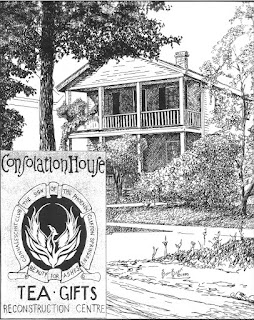
Hi and thank you for stopping here to look at the poster handouts that are being distributed at the 2017 AOTA conference! If you were unable to get a copy of the handout of the poster presentation, the files below are hi-res JPG scans that you can download and view in a larger format. This version of the timeline is one small step of a multi-year project attempting to document George Barton's life.  I was always struck by the fact that his life story was documented in such a limited way as compared to other occupational therapy founders.  The lack of previously published information on Barton motivated my effort. Having personal geographic proximity to Clifton Springs made the project interesting from that perspective as well. This effort started by happenstance and with a meeting my wife Caroline had with George Barton Jr.'s wife Barbara.  She was kind enough to supply materials to us that started this inquiry.  A visit to Consolation House also yielded resu...

You can't keep a good event down...

Image
...but you might delay things just a little while because of winter weather! Today a gathering was scheduled in Clifton Springs for a celebration of the occupational therapy founding.  The mayor was also scheduled to issue a proclamation but the celebration had to be postponed due to inclement weather.    The event will be rescheduled. +++ The March 8. 1917 Clifton Springs Press had an announcement about the upcoming First Consolation House Conference, but it also had an interesting article about George Barton.  The subheadlines and text of the article are notable because they provide direct evidence of exactly how the Clifton Springs community felt about his efforts and also how influential he was. The article quotes an unnamed folk source as saying, "You can't keep a good man down, especially when he runs an elevator for a living."  The newspaper editor goes on to state "and in no instance has the editor found opportunity to apply this witicism, ...

The Lenten message of Emmanuel practitioners that influenced the occupational therapy profession

Image
I have previously documented (in presentation and in blog) the role of the Emmanuel Movement with regard to its overall impact on 'treatment' of mental health conditions at the turn of the century in general and its impact on George Barton in particular .  I have also documented some lingering impact of concerns with spirituality and how the topic has been reflected in some occupational therapy documents over time.  As we are on the eve of the Lenten season, and as we are properly situated in history to reflect on the crucible of values that contributed to the founding of the occupational therapy profession, this little sideways journey seems timely and appropriate. Many occupational therapists enjoy using the term 'holistic' to describe their orientation and interest but few are adroitly capable of putting such diversity that includes spirituality into actual practice.  This has always been the case - even when turn of the 20th century 'providers' made the...

An unusual connection between American opera and George Edward Barton

Image
There is a God whose laws unchanging No one may hope to disobey. Man's own desires forced upon the ordained way. He for a moment triumphs, He has his will, He pays the penalty.     (Barton, 1905) The Pipe of Desire is a one act play published in 1905 by George Edward Barton, and set to operatic score by Frederick Converse.  It might be just a curious fact that architect George Barton attempted the role of librettist except for the historic implications of this effort. We know that as a young man Barton was raised in a family "steeped in the arts and letters" (de Lancey, 1958).  From the same source we also know that he had a bicycle encounter in the English countryside with King Edward VII where they were both "whistling operatic arias." So although Barton may have had early exposure to and enjoyed the operatic form there is not much known about the specifics of how the historic collaboration with Converse actually came about.  Coburn (1909) wr...

Occupational therapy history: A lopsided tale told by the 'designated survivors'

Some overtly prejudicial information has been published about George Barton.  In an officially sanctioned history of the occupational therapy profession, Quiroga (1995) wrote that "Barton was undoubtedly an unusual if not eccentric character, who had difficulty knowing his own identity."  She also stated that "some of Barton's writings may have created more foes than allies to the cause" and that "George Edward Barton was an occupational therapy zealot" with a "near-crusade mentality" who "was undoubtedly a difficult person with whom to work in the organizational phase of the national association" who "did not possess the interpersonal skills that he needed" and "simply did not fit the profile of what his contemporaries considered to be a professional leader." There is very little evidence to support this level of prejudice.  Quiroga misinterprets Barton's claim to being a 'sociologist' - forge...

Isabel Gladwin Barton: Wife, Helpmeet, and Collaborator

Image
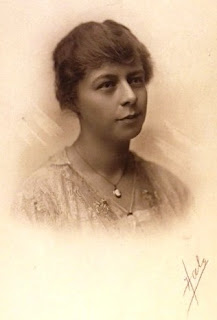
According to publicly available records and genealogy databases, Isabel Gladwin Newton was born on July 21, 1891, in Geneva, New York, to Mary Risley Gladwin, age 24, and Frank Ellsworth Newton, age 28. Isabel Gladwin Newton met George Barton when she was twenty five years old and working as a bookeeper in a preserving and canning plant.  She responded to his contact and offer for work; she reported being particularly motivated by the salary of $15 per week, which was more than her $11 weekly salary at the plant. She began working for him on August 1, 1916. (Barton, 1968). She reported being "drawn to him from the very first" and immediately began acting as his secretary and helping him with the publication of several articles and books.  She also provided significant material support to Barton in helping to manage his correspondence and organize materials for the First Consolation House Conference and founding of the National Society for the Promotion of Occupation...

The Case of Lena, Part III: George Barton's promise to help others who were in pain

Image
The original book "The Counterpane Fairy" was written and illustrated by Katharine Pyle in 1898 .  It is a fanciful story of a fairy who visits children in their beds as long as they do not cry.  The fairy brings some comfort to these children and has the ability to magically transport them away from their circumstances if they focus on one of the squares of their counterpanes (bedspreads). Occupational therapists may not be aware of how this story is relevant to the profession's history.  This post will conclude the exploration of 'The Case of Lena' and explain how Pyle's story influenced George Barton. Barton did not write much about children but as previously noted he was struck by the 'Case of Lena' and that prompted him to write to his newspaper's editor in January of 1920.  It is hazardous to guess a person's motivation from such a distal historical vantage point, but we do know that Barton referred to Lena as "a very real and...

Correcting the record: The relationship between Barton and Dunton

Image
The 1992 article "Point of Departure: A Play About Founding the Profession" written by Robert Bing, has some notable inaccuracies that require correction.  The article has incorrect dates, incorrect attributions, and factual errors.  The article was written in a somewhat whimsical fashion in the form of a play.  However, it is important for such a telling to correctly reflect the historical record.  It is possible that poetic license, used in context of history, does a disservice to our proper understanding of events as they actually occurred. Contrary to what commonly occurs, I believe that it is important for us to make sure that legends do not become facts. In an article relating to historical documentary methods, Dunne, Pettigrew, and Robinson (2016) state that researchers must be cautious about facts and that simple linear accounting may be helpful to establish basic narratives.  Bing's article does not meet this criteria in that some reported events ...

The Case of Lena, Part II: Barton's response to 'A Common Man'

Continued from Part I - Read here. This exploration of some of Barton's writing outside of professional journals is offered for additional context to assist readers in understanding his concerns and passions that related to the occupational therapy profession. +++ The story of Lena got one reader of the Geneva Daily Times "all choked up."  This reader called himself "A Common Man" and wrote a letter to the editor on January 19, 1920 asking more about Lena's story: Now what I don't understand is this.  It was too bad that Lena couldn't take that elegant job in the 5&10 and I guess the manager was sorry too because they say it's hard to get good girls like Lena and her father would be glad of her help I'll say so. Well what I want to know is this.  Why couldn't Lena learn something at Oak Mount so that when she got well again she could get a better job... that would help her father more and the extra pay she's get would ...

The Case of Lena

History provides context for understanding.  We are so far removed from the daily life struggles of 100 years ago and our own experiences are so very different that it is difficult for us to develop a clear understanding of  why events unfolded the way that they did. Occupational therapy is a health related profession that was born from the crucible of American society and culture at the turn of the 20th century.  As such, events from those times greatly influenced the thinking of our primary founders. George Edward Barton lived in Clifton Springs in Ontario County on the street behind the Clifton Springs Sanitarium (private) which had a capacity of 400 patients.  The Ontario County Sanitorium for Consumptives (Oak Mount) was the public facility, previously known as the County 'Poor House' in nearby East Bloomfield and had a capacity of around 40 patients. Barton was motivated by realities of the public health crisis of tuberculosis.  He was motivated beca...

From elite social clubs to personal atonement: The history of the formation of Consolation House.

Image
Private and elite clubs were vehicles of socialization and business transaction during the Gilded Age.  Clubs were often restricted in membership and members were highly scrutinized before being offered the opportunity to join.  The Tavern Club in Boston is one example of an elite social club.  It was established in 1884 and was a gathering place where the members were focused on fine dining, lectures, and the arts.  Notable members included Charles Eliot Norton, William Dean Howells, and Henry Cabot Lodge.  Herndon (1892) described the club as "an organization of good fellows, mostly artists, musicians, and lawyers, who breakfast and dine together with more or less regularity in their snug and artistically fashioned club-house on Boylston Place, just off the busy thoroughfare of Boylston Street by the Commons."  The entrance dues in 1892 was a $50.00 fee.  The approximate 'economic status' of that amount in 2015 terms is $11,100.00, which provid...

How history repeats itself when we plan for OT Anniversaries!

Image
Near the beginning of this series on the history of the occupational therapy profession I documented how many of the details about George Barton and Consolation House were beginning to fade.  A concerted effort near the 50th anniversary of the profession helped to preserve some memory and connection to Consolation House, but planning for this event was very complicated. I was excited today to hear that there was some beginning plans to commemorate the occupational therapy Centennial by having some ceremony or re-dedication plaque in Clifton Springs.  This is all in the beginning stages of planning, but it reminded me about the initial plans to celebrate the 50th anniversary in Clifton Springs.  I thought I would share some of the source documentation that went into that planning. During the planning stages for the 50 year celebration the Consolation House was privately owned by Mr. William Wright.  Here is a letter that was written to Mr. Wright from AOTA Presid...

From Social Gospel to the New Deal: A values juxtaposition that has been whitewashed by OTs

I was interested to see some comments from Dr. Elizabeth Townsend (2015) in an online forum asking "How are we building leadership for key posts at universities in support an [sic] occupation focus - both in the science and therapy of occupation?"  She asked this question in context of an open position at Dalhousie's School of Occupational Therapy in Halifax, Nova Scotia but was interested in a more general sense of how to build leadership outside of large metropolitan areas.  This interested me because I have been studying recruitment and spread of occupation workers at the time of the founding of the occupational therapy profession.  I began to wonder if a study of this history could provide context for interpreting the current recruitment call. An important early supporter of proto-occupational therapy was a man that is not often cited in American textbooks.  Sir Wilfred Thomason Grenfell is described as a "physician, medical missionary, social reformer, and ...